
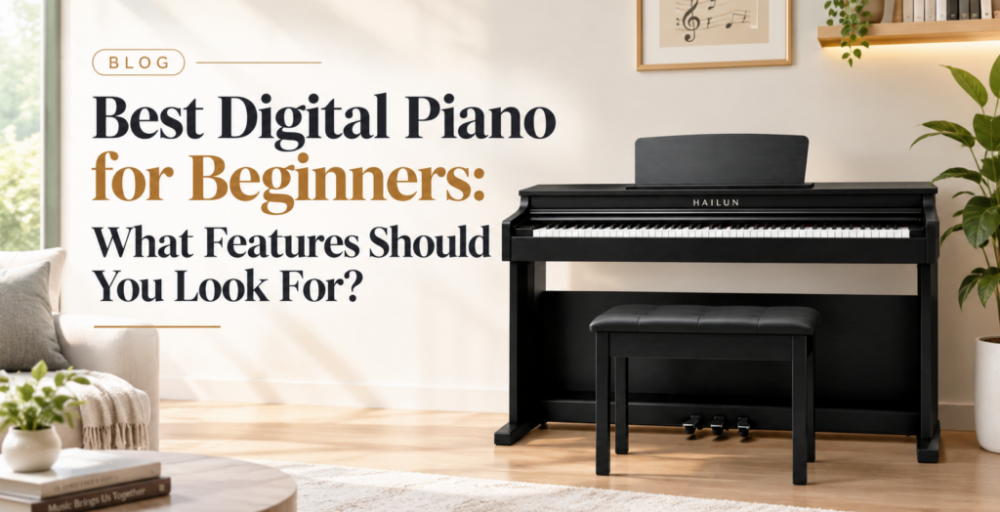
Best Digital Piano for Beginners: What Features Should You Look For?
Best Digital Piano for Beginners
Best Digital Piano for Beginners: What Features Should You Look For?
Choosing your first digital piano can be an exciting step, especially if you are just beginning your musical journey. With so many options available today, beginners may find it difficult to decide which instrument is the right one. From sound quality and keyboard response to built-in features and design, there are several things worth considering before making a purchase.
A Digital Piano can be an excellent option for beginners because it combines the playing experience of a traditional piano with the convenience of modern technology. But what features should you actually look for when choosing one?
Here is a practical guide to help you find the right instrument for learning, practicing, and enjoying music at home.
- Look for 88 Keys
One of the first specifications beginners should consider is the number of keys.
A standard acoustic piano has 88 keys, and choosing a Digital Piano with 88 keys allows beginners to become familiar with the full range of the piano. It also means you are less likely to outgrow the instrument as your playing skills improve.
For serious beginners, 88 keys can provide greater flexibility when learning scales, chords, classical pieces, and more advanced repertoire.
If space is limited, smaller keyboards may seem attractive, but they may not provide the same playing range as a full-sized piano.
- Pay Attention to Key Feel
The number of keys is important, but how those keys feel when you play them is equally important.
A good beginner piano should provide a comfortable and responsive keyboard. Weighted or hammer-action keys can create a playing experience that feels closer to an acoustic piano.
This is particularly useful for beginners who want to develop proper finger strength, dynamics, and playing technique.
When testing a Digital Piano, try playing both softly and firmly. Notice how the keys respond to different levels of pressure. A responsive keyboard can make practicing more enjoyable while helping you understand musical dynamics.
- Check the Sound Quality
Sound is one of the most important factors when choosing a piano.
Modern digital pianos use recorded or digitally modeled piano sounds to recreate the character of acoustic instruments. However, the quality of these sounds can vary considerably between models.
Look for an instrument with a natural and expressive piano tone. Ideally, the sound should respond naturally when you play with different levels of pressure.
If possible, visit a showroom and try several models side by side. This makes it easier to hear the differences in tone, clarity, resonance, and dynamics.
- Consider Polyphony
Polyphony refers to the number of individual notes a digital piano can produce simultaneously.
For beginners, basic polyphony may be sufficient for simple songs. However, higher polyphony can be useful when using the sustain pedal, playing complex pieces, or layering multiple sounds.
A Digital Piano with higher polyphony can provide more flexibility as your musical skills develop.
Instead of choosing a piano based only on the highest number available, consider how you plan to use the instrument. The right balance of sound quality, keyboard response, and polyphony is more important than focusing on one specification alone.
- Look for Useful Learning Features
Technology can make learning piano more engaging, particularly for beginners.
Depending on the model, useful features may include:
- Metronome
- Recording function
- Different instrument sounds
- Lesson modes
- Rhythm patterns
- Split and layer functions
- Headphone connectivity
- Bluetooth or other connectivity options
These features can make practice sessions more varied and enjoyable.
However, having more features does not automatically mean a piano is better. Focus on features that you are actually likely to use during your learning journey.
- Headphone Connectivity Can Be a Big Advantage
For people who live in apartments, shared homes, or busy households, headphone connectivity can be extremely useful.
It allows you to practice without disturbing other people. You can play early in the morning, late at night, or whenever you have time without worrying about the volume.
This is one reason a Digital Piano can be particularly practical for home use.
Before purchasing, check whether the piano supports the type of headphone connection you prefer and whether the headphone experience provides clear and balanced sound.
- Consider the Piano’s Size and Design
Your available space should also influence your decision.
Measure the area where you plan to place the piano before buying one. Remember to leave enough room for a comfortable bench and playing position.
Portable models can be useful for smaller rooms or musicians who need flexibility. Console-style digital pianos may be more suitable for people who want an elegant piece of furniture that complements their interior.
A well-designed Digital Piano can serve not only as a musical instrument but also as an attractive addition to a modern home.
Try Before You Buy
One of the best ways to choose the right Digital Piano is to try it yourself.
Specifications can tell you about the instrument, but they cannot completely describe how the keys feel under your fingers or how the sound responds to your playing.
Try several models if possible. Play simple scales, chords, and songs that you already know. Pay attention to the keyboard response, sound, pedal feel, and overall comfort.
If you are unsure, speaking with a piano specialist can also help you understand which specifications are most relevant to your needs.
Conclusion
Finding the best piano for a beginner does not necessarily mean choosing the model with the most features or the highest price. The right instrument should provide a comfortable playing experience, good sound quality, useful features, and enough flexibility to support your musical development.
When choosing a Digital Piano, pay attention to the number of keys, key response, sound quality, polyphony, learning features, connectivity, size, and long-term value.
Most importantly, take the time to try the instrument before making your decision. A piano that feels comfortable and inspires you to practice can make a meaningful difference in your musical journey.
With the right Digital Piano, learning your first songs can be more enjoyable, engaging, and rewarding—turning every practice session into another step toward becoming a better pianist.